 Thu, Jul 30, 2026 2:13 PM
Artificial intelligence (AI) and the continued decline in digital advertising revenue are reshaping the media business landscape. At the Jatim Media Summit (JMS) 2026 in Surabaya on Thursday (July 30), industry leaders agreed that media organizations must urgently develop new revenue streams, as business models built primarily on web traffic and digital advertising are no longer sufficient to ensure long-term sustainability.
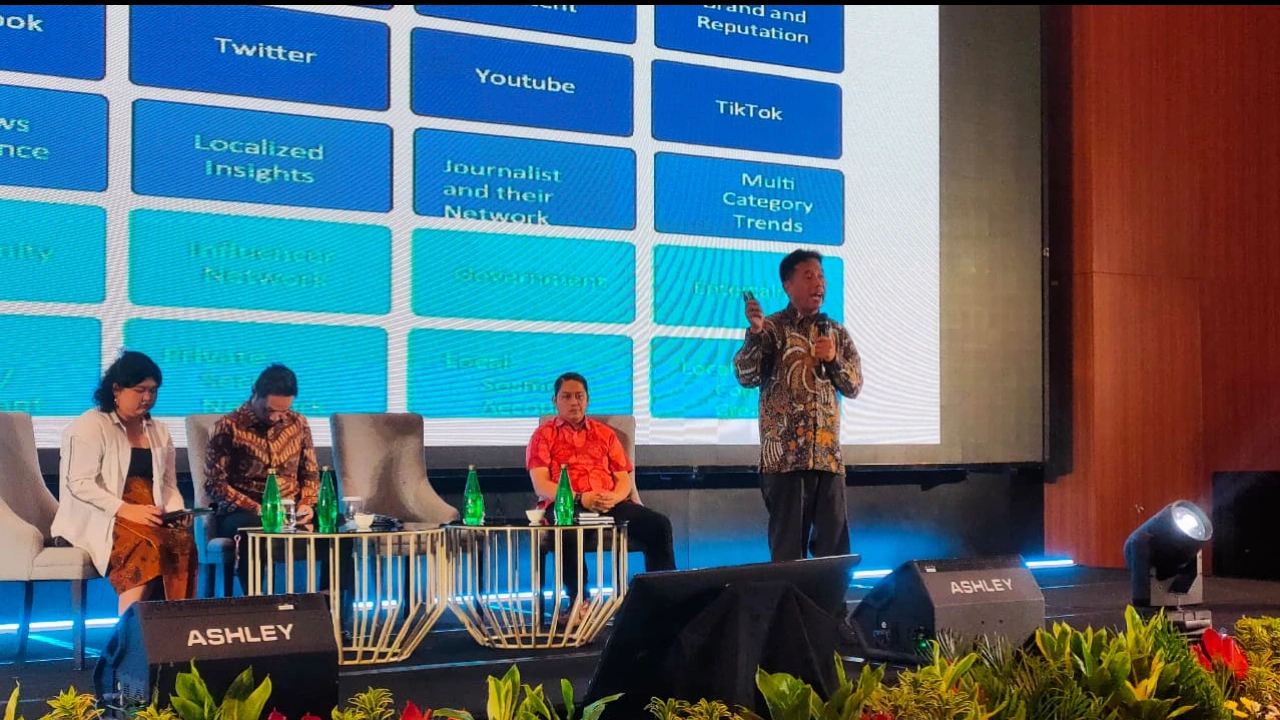
The opening session of JMS 2026, themed "Creative Economy Ecosystem and Beyond Media Transformation in East Java," featured Vicky Arief Herinadharma, Chairman of the Indonesian Creative Cities Network (ICCN), Suwarjono, Editor-in-Chief of Suara.com, and David Santoso, CEO of the Singhasari Special Economic Zone (SEZ).
The speakers agreed that transforming the media industry is no longer optional but an urgent necessity as technology continues to evolve at an unprecedented pace.
Vicky said East Java is entering a strategic moment after being designated by Indonesia's National Development Planning Agency (Bappenas) as one of the country's priority provinces for creative economy development.
According to him, the creative economy has proven to be an effective driver of employment, investment, exports, and regional economic growth by leveraging human talent, creativity, and innovation.
"If every regency and city in East Java develops a clear roadmap for the creative economy, it will provide real solutions to regional challenges, particularly unemployment and investment," he said.
He added that East Java has strong potential to become Indonesia's creative economy hub, supported by the Singhasari SEZ—the country's first special economic zone dedicated to the creative economy and technology sectors.
The presence of King's College London at Singhasari SEZ, he said, further strengthens East Java's position as a center for creative talent development.
For the media sector, Vicky argued that media organizations should evolve from being mere information providers into key drivers of the creative economy ecosystem.
He proposed establishing the East Java Creative Media Collective, a strategic alliance bringing together hundreds of local media outlets to compete nationally through content collaboration, events, creative services, SME data integration, and the development of local intellectual property (IP).
"Rather than operating individually, local media should collaborate to build collective strength and create new business models," he said.
Meanwhile, Suwarjono described the increasingly difficult conditions facing the media industry, revealing that nearly all national media organizations have experienced significant traffic declines over the past year.
"Our monitoring shows that media traffic has dropped by around 40 to 46 percent over the past year. Almost every media organization is experiencing the same trend," he said.
According to Suwarjono, traditional business models relying on page views, Google AdSense, and banner advertising are no longer capable of sustaining media companies. Advertising spending continues to decline, while the cost of producing quality journalism remains high.
He said media organizations must diversify their revenue through the Beyond Media concept by expanding into businesses beyond conventional journalism.
Potential opportunities include communication consulting, community management, event organizing, creative content production, and AI-powered services.
Another emerging opportunity is Generative Engine Optimization (GEO)—optimizing content so it becomes a trusted source for generative AI platforms.
Suwarjono noted that AI systems increasingly rely on credible news organizations because of their authority, trustworthiness, and professionally produced journalism.
"In the past we focused on SEO. Now we must move toward GEO. Credible media content will become a primary reference for AI, and that's where new business opportunities will emerge," he explained.
He also believes local media have a competitive advantage because they produce original, on-the-ground reporting that is difficult for other platforms to replicate.
David Santoso, CEO of the Singhasari SEZ, said the zone is being developed as Indonesia's national hub for creative economy industrialization.
He stressed that media transformation must be supported by education, research, investment, and international collaboration.
The Singhasari SEZ currently hosts King's College London and Hello Motion High School, while GMC Academy (Australia) and the Indian Institute of Management Bangalore are expected to establish programs focused on AI leadership development.
The zone is also developing the Mumbai–Malang Creative Tech Corridor, an international collaboration aimed at strengthening the media, film, animation, and digital content industries.
David said such global partnerships are expected to accelerate the growth of internationally competitive creative industries. Through collaboration among government, media, creative businesses, educational institutions, and the technology sector, East Java is well positioned to become Indonesia's next creative economy powerhouse and a model for the Beyond Media transformation.
© 2026 SUARA.COM - ALL RIGHTS RESERVED.


