 Thu, Jul 30, 2026 4:31 PM
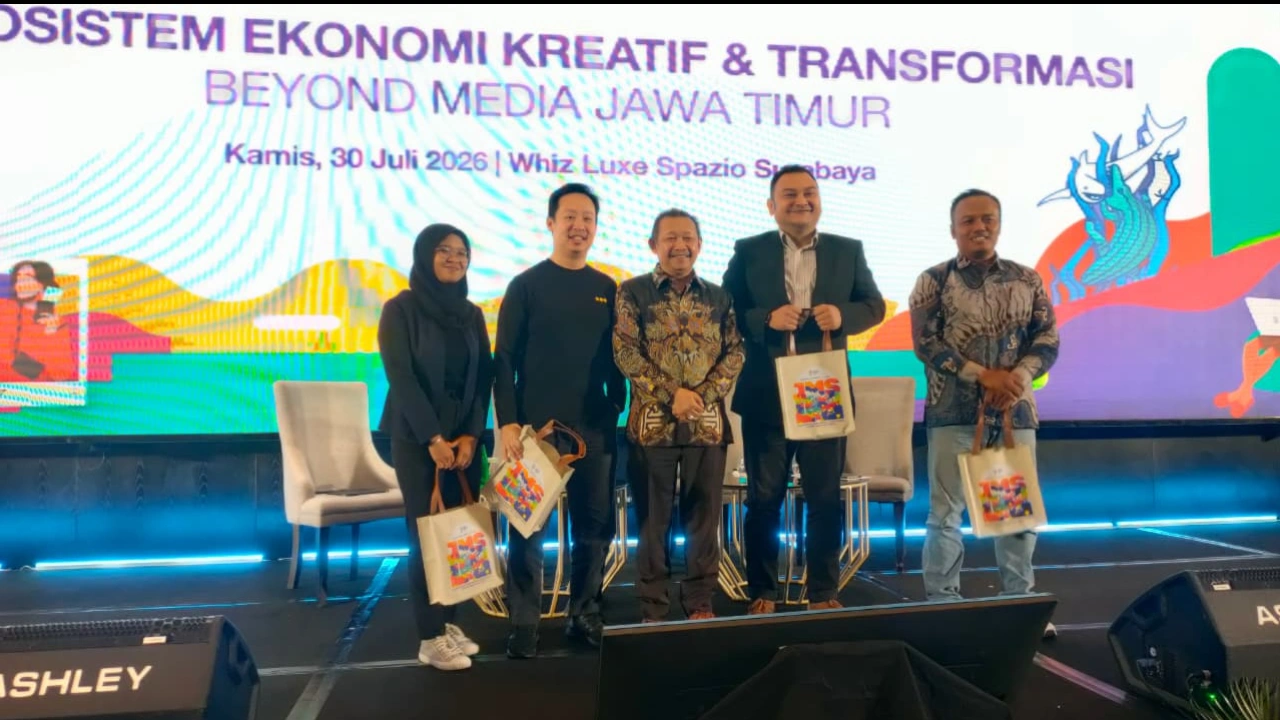
Indonesia's media industry is not facing a crisis, but rather struggling to adapt to rapidly changing audience behavior and digital technology. That was the central message delivered during the Jatim Media Summit (JMS) 2026 in Surabaya on Thursday (July 30), where media leaders, digital businesses, and financial technology companies gathered to discuss the future of the industry.
Hendra Hutagalung, broadcaster at Suara Surabaya, argued that media organizations still have a promising future—provided they abandon outdated business models and embrace innovation.
"The media industry is not in crisis. The real problem is that we're still running media businesses the old way," he said.
According to Hendra, the industry's greatest asset today is no longer simply delivering information, but earning and maintaining public trust.
He described trust as the new currency of media, outweighing page views and advertising revenue.
Suara Surabaya, for example, has evolved from a traditional radio station into a digital media ecosystem that integrates radio broadcasting, online news, social media, podcasts, and live streaming across multiple platforms.
Listeners are also treated as active contributors, providing reports on traffic congestion, accidents, and community issues that are later verified by the newsroom.
"Our listeners are not merely audiences—they are part of the information ecosystem. That's where trust is built," Hendra explained.
Beyond strengthening its digital presence, Suara Surabaya has diversified its revenue through intellectual properties (IPs), including the Jazz Traffic Festival, Ramadan Vaganza, Suara Surabaya Academy, and communication training programs for small and medium-sized businesses.
Hendra argued that media organizations must evolve from information providers into problem solvers for both communities and businesses.
Meanwhile, Marchelo, Corporate Communication Lead at Bank Jago, emphasized that digital transformation requires collaboration.
He said Bank Jago's growth has been driven by partnerships with digital platforms such as GoTo, Bibit, and Stockbit, making financial services more accessible to users.
One of the bank's flagship features, Pocket, allows customers to organize funds into separate digital "envelopes" for different purposes, including business operations, emergency savings, investments, and daily expenses.
"The concept is simple. Our parents used envelopes to separate money. We've digitized that system into one application," he said.
Marchelo added that Bank Jago also invests in financial literacy through partnerships with communities and media organizations, including Suara.com, believing education is essential for maximizing the benefits of digital technology.
Sharing the perspective of local media, Abdul Qohar, founder of BlokBojonegoro, said media companies must develop stronger entrepreneurial instincts.
"Every opportunity that can be monetized should be monetized," he said.
He compared a media company to a warship that requires merchant ships to supply resources, arguing that journalism alone cannot sustain media organizations financially.
Instead of relying solely on conventional advertising, media outlets should expand into complementary businesses that leverage the strength of their brands.
The discussion concluded that the future of media will depend not only on producing quality journalism, but also on building ecosystems that connect media organizations with communities, technology companies, and businesses.
Speakers agreed that collaboration, innovation, digital transformation, and public trust will be the foundations for ensuring media organizations remain relevant and financially sustainable in an increasingly competitive information landscape.
© 2026 SUARA.COM - ALL RIGHTS RESERVED.


