 Fri, Jul 31, 2026 11:58 AM
For the past two decades, digital media has been locked in a race for clicks, traffic, and impressions. But the rise of artificial intelligence (AI) is fundamentally rewriting the rules. As AI-powered platforms increasingly provide instant answers without directing users to news websites, one asset has become more valuable than ever: trust.
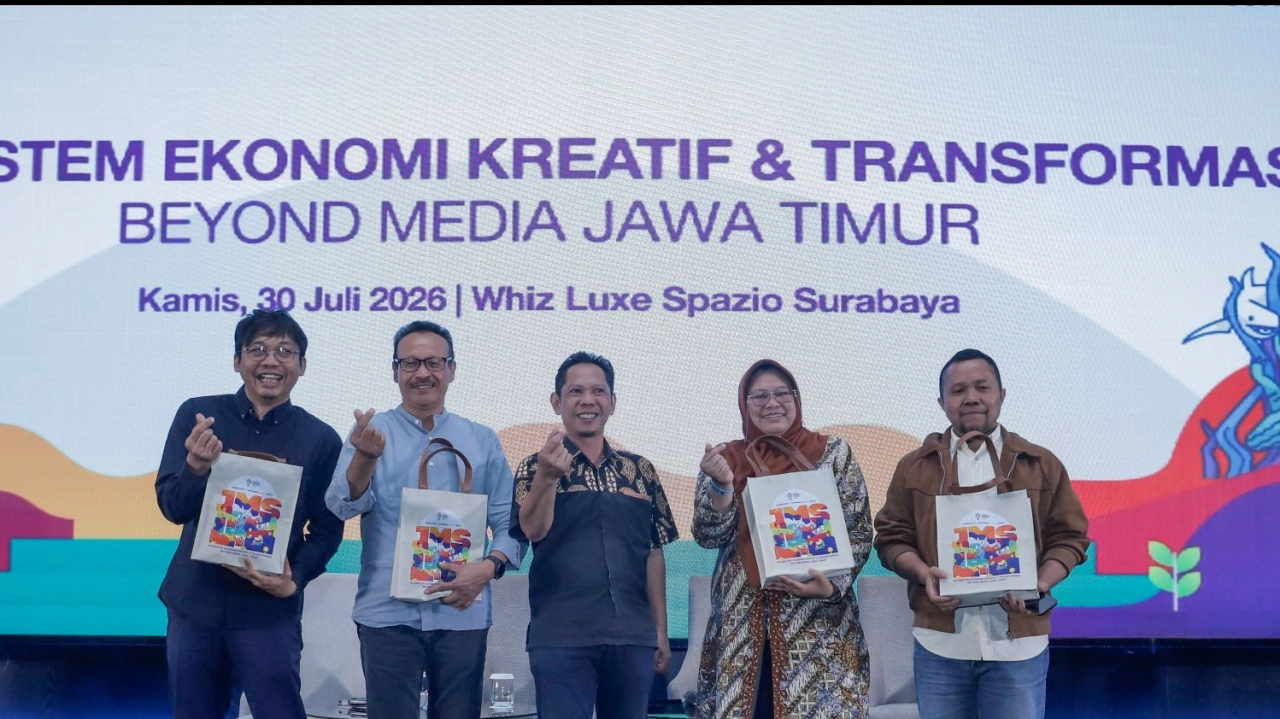
That message emerged as the central theme of the closing session of Jatim Media Summit (JMS) 2026 on Thursday (July 30), where speakers agreed that the future of journalism will no longer be determined by audience size alone, but by its ability to uphold accuracy, independence, and credibility amid an overwhelming flood of information.
Wensesiaus Manggut, Chief Content Officer of KapanLagi Youniverse, argued that AI is not merely another technological innovation but a turning point that could help journalism rediscover its original purpose.
"AI is actually bringing journalism back home," he said.
According to Manggut, Google Search and social media have long served as the primary gateways driving readers to news websites. That model, however, is rapidly changing as AI platforms increasingly deliver direct answers without sending users to the original news sources.
As a result, news organizations, content creators, and influencers now face the same challenge: their work feeds AI systems while traffic to their own platforms continues to decline.
In this new landscape, Manggut said success can no longer be measured by page views alone, but by the quality and reliability of journalism.
"Content is king. Trust is king. Independence is king. In the AI era, trust is the most valuable asset," he stressed.
He also criticized the digital media business model for relying too heavily on clicks, arguing that it has encouraged sensational content at the expense of public-interest reporting on issues such as inflation, the economy, and government policy.
Use AI, But Don't Trust It Blindly
A similar perspective was shared by Sherlita Ratna Dewi Agustin, Head of the East Java Communication and Information Office (Diskominfo).
She revealed that internet penetration in East Java has reached 83.41 percent, surpassing the national average of 81.72 percent. The province also accounts for 15.10 percent of Indonesia's total internet users, making it one of the country's largest digital markets.
According to Sherlita, shifting audience behavior means both governments and media organizations must adapt.
"Media must change because its audience has changed. Today's children are born into a world where the internet has always been part of everyday life," she said.
To strengthen public trust and combat misinformation, the East Java Provincial Government now requires all government agencies to operate verified social media accounts.
The province has also expanded its Cerdik (Smart Digital) literacy program, which has trained more than 41,000 participants since 2025. This year's curriculum includes AI agents, prompt engineering, and AI system development through the AI Talent Factory, a collaborative initiative involving Institut Teknologi Sepuluh Nopember (ITS), Universitas Brawijaya, and Universitas Gadjah Mada.
Despite promoting AI adoption, Sherlita emphasized that people should never accept AI-generated information without verification.
"Use AI, but don't trust it one hundred percent. AI still makes mistakes, so every output must be verified," she warned.
East Java is also investing in cybersecurity talent through initiatives such as the Cyber Defense Academy and cybersecurity competitions for high school and vocational students in partnership with Indonesia's National Cyber and Crypto Agency (BSSN).
Media as the Last Line of Defense Against Post-Truth
Meanwhile, Professor Martadi of Universitas Negeri Surabaya (Unesa) warned that the greatest challenge is not AI itself, but the growing post-truth era, where repeated misinformation is increasingly accepted as fact.
In such circumstances, he said, journalism carries an even greater responsibility as society's trusted fact-checker.
"When people begin to question whether information is true or false, they will return to trusted media. That is the soul of journalism, and it must never disappear," he said.
Martadi also called for permanent collaboration between government, universities, media organizations, and industry so that academic research can be translated into accessible information rather than remaining confined to scholarly journals.
The summit concluded with a shared message from its speakers: as AI transforms how people discover and consume information, the future of journalism will depend not on speed or clicks, but on its ability to earn and preserve public trust through accurate, independent, and responsible reporting.
© 2026 SUARA.COM - ALL RIGHTS RESERVED.


