 Mon, May 25, 2026 11:22 AM
For small-scale local media outlets, competing in the pageview game against national media giants and aggregator platforms is a nearly impossible battle to win. With limited editorial resources, outdated business models relying on programmatic advertising (like Google AdSense) will only generate modest revenue.
To achieve sustainability in today's digital ecosystem, small local media outlets must shift their paradigm: stop chasing mass traffic and start building trust at a hyper-local level.
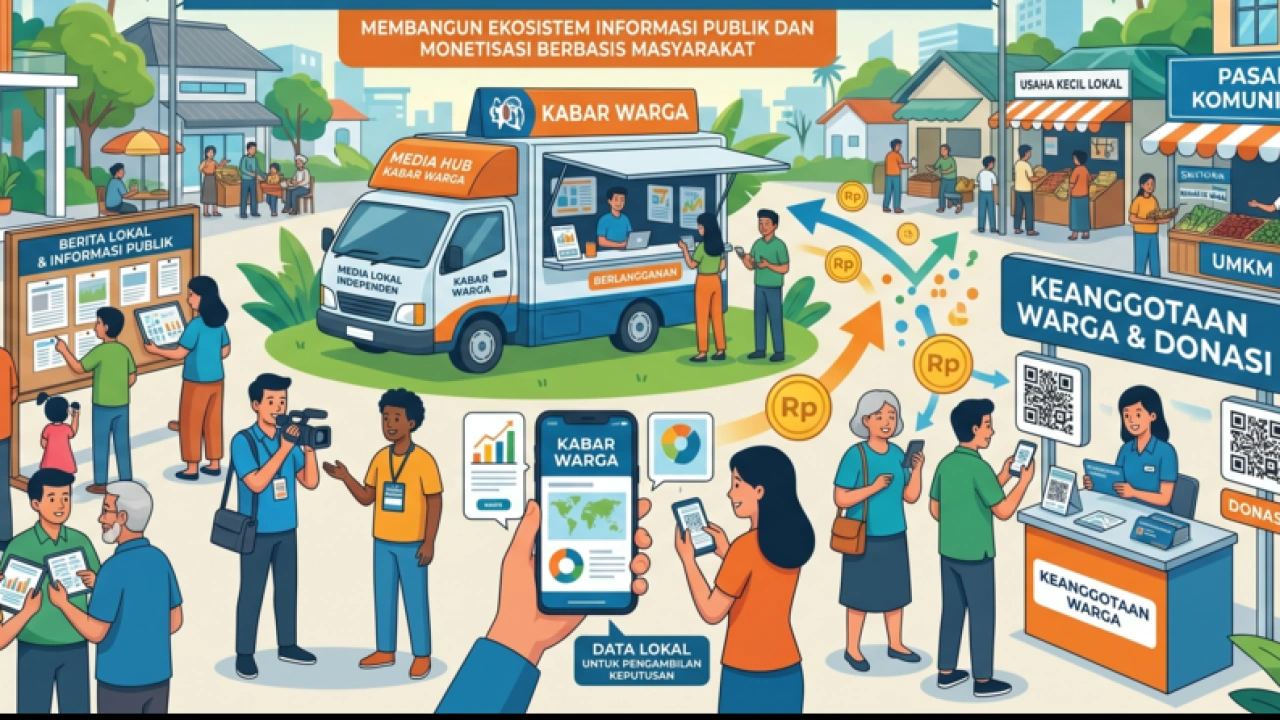
The most sensible business innovation for small-scale media outlets today is to position themselves as community hubs. By managing specific public information that directly impacts residents' lives, media outlets can build highly loyal audiences and monetize them through a more participatory approach.
1. Building Community Through Relevant Public Information
Communities aren't formed simply by creating WhatsApp groups or sharing news links. They emerge when media outlets are able to provide public information that has high utility for local residents.
Focus on Niche Issues and Solutions: Small media outlets don't need to report on everything. Selecting a specific focus—such as environmental issues, urban planning, village budget policies, or local agriculture—is much more effective. Constructive journalism that uses a data-driven approach (e.g., local spatial data) to analyze public issues will attract the attention of citizen groups concerned with the issue.
Media as Facilitators, Not Just Reporters. Instead of simply reporting on damaged roads or stalled public policies, local media can facilitate dialogue. Opening a space for interaction between citizens, local experts, and policymakers will position the media as a central actor in solving local problems.
2. Community Ecosystem Management Strategy
Once the public information presented begins to attract a specific audience, the next step is to engage them within an ecosystem.
Closed Networks
Using platforms such as Telegram, WhatsApp Groups, or exclusive email newsletters to distribute more in-depth information, early warnings on local issues, or draft local government policies before they are enacted.
Hub-and-Spoke Collaboration Model
Small media outlets can network with other hyper-local media outlets at the district or city level (as spokes) to exchange content, while one entity acts as a curation hub. This network syndication amplifies the resonance of local issues at the regional level, while simultaneously increasing the community's bargaining power with strategic partners.
3. Community-Based Monetization Innovation
Once a community has built a foundation of trust, monetization no longer relies on banner ads that disrupt the reading experience. The following business models can be implemented:
A. Membership and Citizen Donation Model
Unlike paywalls (subscriptions to unlock news access), the membership model keeps public information free and accessible to everyone. Monetization is generated by citizens who feel the information is crucial to the community and are willing to pay a monthly membership or regular donation to "support" the newsroom. In return, members receive direct access to the newsroom, closed-door discussions with journalists, or special reports.
B. Media as Initiator of Regional Forums and Summits
Local media with strong communities can act as conveners for various stakeholders. Organizing regional-scale events—such as local business sustainability workshops, MSME festivals, or provincial-level media summits—opens the door to revenue from sponsorships, ticket sales, and strategic partnerships (B2B). Local governments, NGOs, and corporations are willing to fund these events because the media provides direct access to specific communities.
C. B2B Services and Local Intelligence
Because small local media outlets understand grassroots dynamics, they possess data and social insights that capital-based agencies lack. Media outlets can monetize this expertise by offering local market research (local intelligence), communications audits, or training in digital literacy and content creation (including the ethical use of AI) to local government agencies and local private companies.
For small local media outlets, innovation doesn't always mean investing in expensive technology. True innovation lies in redefining the relationship between the newsroom and its readers.
By changing the model from broadcasting to community-building, local media not only saved their financial balance, but also restored the dignity of journalism as a main pillar of the community.
© 2026 SUARA.COM - ALL RIGHTS RESERVED.


