 Wed, Aug 19, 2026 8:28 PM
Indonesia’s digital media landscape stands at a critical crossroads in the third quarter of 2026.
The rapid development of generative artificial intelligence (AI), the transformation of digital search architecture, changing audience consumption patterns, government-led efficiency measures affecting media businesses, and shifts in the advertising market have placed both conventional and digital news organizations under mounting pressure, pushing their business models to one of their most challenging points in recent years.
At the same time, the government, through the Ministry of Law of the Republic of Indonesia, has initiated a revision of Law No. 28 of 2014 on Copyright, with a proposal to recognize journalism as a category entitled to economic rights.
The move follows the enactment of Presidential Regulation No. 32 of 2024 on the Responsibility of Digital Platform Companies to Support Quality Journalism, commonly known as the Publisher Rights regulation.
As part of its public responsibility and an effort to consolidate the voices of regional publishers, the Local Media Community (LMC)—a collaborative network representing hundreds of local, small and medium-sized media organizations across Indonesia—has submitted its views on the proposed regulatory framework.
“Our position is based on operational realities on the ground and on input gathered through a series of independent discussions that LMC recently held with stakeholders across the news media industry,” said Suwarjono, editor-in-chief of Suara.com and one of the initiators of the Local Media Community.
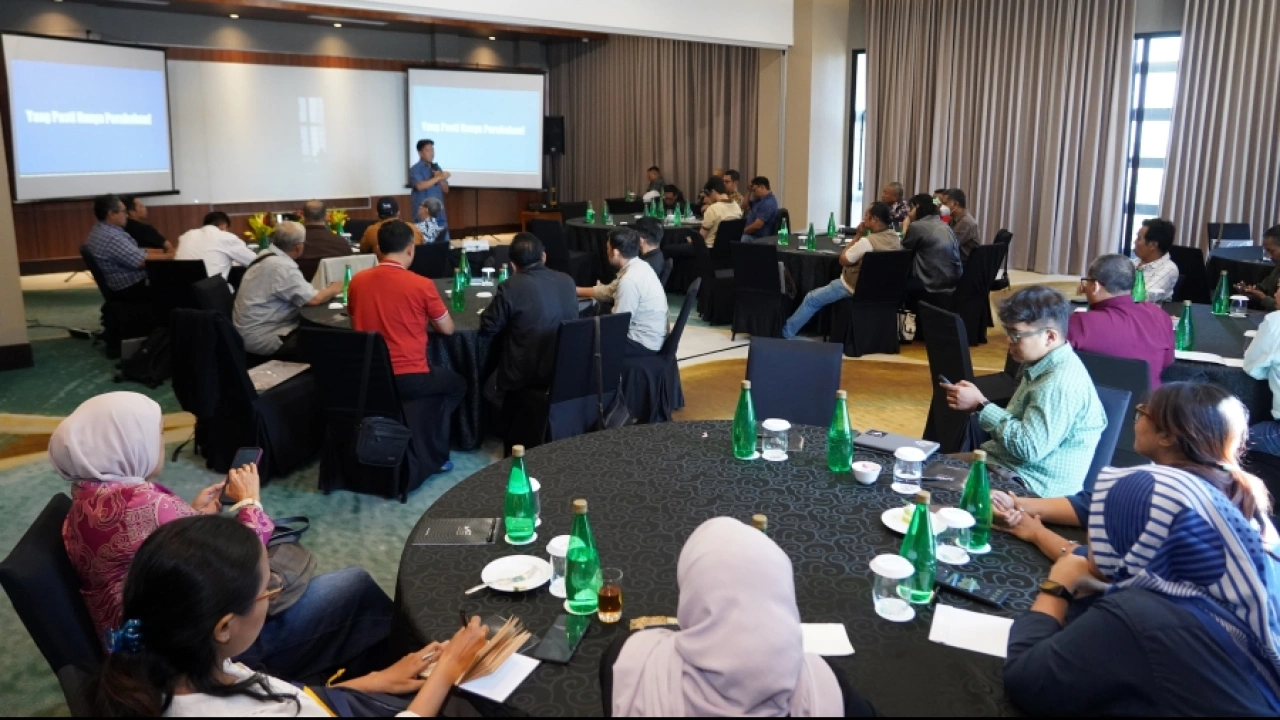
LMC’s formal position was developed following a series of discussion roadshows in Pekanbaru, representing Sumatra; Makassar, representing eastern Indonesia; and Surabaya, representing Java.
Participants included media representatives from Riau, Riau Islands, Jambi, West Sumatra, South Sulawesi, West Sulawesi, Central Sulawesi, Southeast Sulawesi, East Java, Central Java, West Java, Yogyakarta and Bali.
The roadshows confirmed that local media organizations are confronting significant changes in audience behavior. Organic referral traffic from conventional search engines has become increasingly volatile, while Gen Z audiences are increasingly consuming news and information through short-form video and social media platforms such as TikTok, Instagram and YouTube.
At the same time, technology-support initiatives have demonstrated that digital innovation can improve media performance. The Google News Initiative’s (GNI) Project Sigma Indonesia: Gen Z & News, which involved 10 newsrooms in Jakarta and Surabaya, recorded a 1.5-fold increase in young audiences.
Meanwhile, the Revenue Growth Lab Indonesia program, which involved 12 publishers from Sumatra to East Nusa Tenggara, recorded an 18% increase in digital advertising revenue and a 47% increase in user visits.
Despite the efficiency opportunities offered by technological innovation, LMC argues that rigid regulatory intervention—particularly provisions contained in the initial Copyright Bill—could create additional barriers and threaten the business stability of local publishers.
“Our discussions in three cities with around a hundred media leaders representing more than a dozen provinces highlighted these concerns,” Suwarjono said. “As we are already dealing with major changes in the media landscape, including audiences shifting to social media, we do not want copyright regulation to inadvertently create another layer of difficulty.”
The proposed revision of Law No. 28 of 2014 on Copyright is being developed by the Ministry of Law as a structural intervention intended to provide greater legal certainty for journalistic products as intellectual property assets.
Under established copyright doctrine, pure facts or bare facts generally remain in the public domain and are not subject to copyright protection. Legal protection applies to the form in which factual information is expressed rather than to the underlying facts themselves.
The proposed amendment seeks to expand this boundary by recognizing “journalistic works” as a distinct legal category.
The draft introduces a dual-layer protection structure that separates journalists’ moral rights and individual copyright interests from the economic rights assigned to media companies.
However, while the proposed amendment could strengthen the legal position of journalism and publishers, LMC argues that a fundamental gap remains between the regulatory assumptions underpinning the proposal and the actual operational capacity of local media organizations.
For local publishers, the central issue is therefore not simply whether journalistic works should receive stronger intellectual-property protection, but whether the regulatory framework can be designed in a way that reflects the economic realities, technological constraints and limited resources of media organizations outside Indonesia’s largest media markets.
LMC is urging policymakers to ensure that any revision of the Copyright Law strengthens the sustainability of journalism without imposing disproportionate compliance costs or creating unintended barriers for local publishers.
The community argues that regulatory reform should ultimately support the diversity and sustainability of Indonesia’s media ecosystem, particularly at a time when publishers are already navigating fundamental changes in search, audience behavior, artificial intelligence and digital advertising.

Based on the views consolidated during its three-city roadshow, the Local Media Community (LMC) has formally submitted its recommendations and concerns to the government, particularly the Director General of Intellectual Property at Indonesia’s Ministry of Law.
LMC’s position focuses on five key areas that have emerged as major concerns among regional media organizations. The first is the ambiguity surrounding the definition of journalistic works and its implications for the realities of local newsrooms.
1. Ambiguity Over the Definition of Journalistic Works and Newsroom Realities
One of the most fundamental weaknesses in the current discussion of the proposed Copyright Law revision is the absence of a clear and specific definition of what constitutes a “journalistic work.”
For local news organizations, this issue is particularly significant because their newsroom operations are typically supported by highly limited human resources. On average, local editorial teams consist of only five to 10 people.
Such resource constraints shape the composition of their daily output. LMC estimates that roughly 80% of the daily publications produced by regional media outlets consist of government press releases, corporate statements, or basic event-driven straight news that tends to be relatively homogeneous across news organizations.
Only around 20% of their output consists of in-depth reporting, investigative journalism, independent research, or higher-value coverage built around local issues and niche audiences.
This operational reality raises a critical question for policymakers: if “journalistic works” are granted specific copyright protection, what criteria will be used to distinguish original journalistic expression from factual material, press releases, syndicated information, or routine event reporting?
For local publishers operating with small editorial teams, an overly broad definition could create uncertainty over ownership, licensing and economic rights, while an excessively narrow definition could exclude a substantial portion of the journalism produced on a daily basis.
LMC therefore believes that the definition of a journalistic work must be sufficiently precise to provide legal certainty without imposing disproportionate administrative and compliance burdens on small and medium-sized publishers.
The regulatory framework, it argues, should recognize the diversity of journalistic production while maintaining the fundamental distinction between factual information—which generally remains outside copyright protection—and the original expression, editorial judgment and creative effort involved in producing a journalistic work.
If the law adopts an overly broad definition of a “journalistic work,” raw press releases, compiled news reports and clickbait articles could potentially be claimed as protected works, creating opportunities for publishers to make unilateral compensation claims.
Such a framework could generate legal uncertainty, trigger disputes among publishers and ultimately undermine a professional and sustainable media ecosystem. LMC therefore proposes that copyright protection and royalty entitlements be narrowly limited to original journalistic works that meet rigorous standards of factual verification and substantive reporting, while excluding public information and official press releases.
2. The Risk of Losing Content Distribution and Programmatic Advertising Revenue
In today’s digital ecosystem, the relationship between news organizations and global digital platforms is not simply about direct financial compensation. It is also fundamentally about access to distribution infrastructure.
Local media organizations, which often operate with limited budgets for servers, IT infrastructure and marketing, rely heavily on indexing by search platforms and news aggregators to reach audiences at scale.
If the proposed Copyright Law introduces rigid payment obligations that significantly increase the costs or legal exposure of digital platforms, local publishers could face a potentially serious unintended consequence: the withdrawal or restriction of news content distribution.
Any reduction in indexing by major platforms could result in a sharp decline in traffic and pageviews for local media outlets. The knock-on effect would be a loss of revenue from programmatic advertising networks, including platforms such as Google AdSense, which have become an important source of operating cash flow for many regional publishers.
In other words, local media organizations could theoretically gain access to copyright compensation while simultaneously losing the advertising revenue that currently sustains their newsroom operations.
For LMC, this represents a critical regulatory trade-off that policymakers need to address before introducing a mandatory compensation mechanism.
The objective of copyright reform, the organization argues, should not be limited to establishing a new source of royalty income. It must also ensure that the regulatory framework does not inadvertently undermine the digital distribution channels on which local journalism depends.
3. Strengthening Business-to-Business Licensing Rather Than Centralizing Rights Management
LMC has also expressed strong opposition to a government proposal that would channel the management and distribution of royalties for journalistic works through Collective Management Organizations (LMK) and the National Collective Management Organization (LMKN).
The organization’s position is partly based on concerns over the governance track record of collective rights management in Indonesia’s music industry, where issues surrounding data transparency, relatively high administrative and operational deductions, and delays in royalty distribution have frequently been raised.
LMC argues that the characteristics of journalistic content differ fundamentally from those of music and other creative works traditionally managed through collective licensing mechanisms.
News publishers operate in a highly dynamic environment in which content is produced, updated, distributed and republished across multiple platforms within hours—or even minutes. A centralized royalty-management system could therefore create additional layers of bureaucracy and delay payments to publishers whose cash flow is already under pressure.
Instead of centralizing the management of journalistic rights through LMK or LMKN, LMC advocates a stronger business-to-business (B2B) licensing framework that allows publishers and digital platforms to negotiate commercial arrangements directly.
Under such a model, publishers would retain greater control over their intellectual property, while platforms would have clearer commercial obligations. Direct agreements could also provide greater flexibility in determining licensing terms, usage parameters, reporting mechanisms and payment structures.
For regional publishers in particular, LMC believes that a B2B approach could deliver a more transparent and commercially responsive system while reducing administrative costs and minimizing the risk that a substantial portion of potential compensation is absorbed by intermediary structures.
The fast-moving nature of the digital news industry requires media organizations to maintain flexible day-to-day cash flow. Adding another bureaucratic layer through collective rights management bodies could place further financial pressure on local publishers, whose operating margins are already limited.
LMC therefore advocates either a pure business-to-business (B2B) licensing model or a **hybrid model—the “third way”—proposed by the Press Council and the Alliance of Independent Journalists (AJI).
The rationale is straightforward: a B2B framework would give media companies greater autonomy to negotiate directly with digital platforms based on the commercial value of their content and audience. Such an approach is consistent with the underlying principles of Presidential Regulation No. 32 of 2024, which emphasizes paid licensing arrangements or revenue-sharing mechanisms based on contractual agreements between the parties.
For LMC, direct commercial negotiations would also provide greater flexibility to account for differences in the scale, audience reach, content value and business models of individual publishers. This could be particularly important for local media organizations, whose economic circumstances vary significantly from those of large national publishers.
4. The Impact of a “Link Tax” on the Principle of an Open Internet
LMC has also strongly rejected proposals to introduce a link tax that would impose payment obligations for the use of hyperlinks and short content snippets.
The organization argues that the underlying assumption—that digital platforms exploit news publishers simply by indexing their links—is fundamentally flawed.
Link indexing is a core mechanism of the open internet. Rather than merely extracting value from publishers, search engines and aggregators can provide publishers with referral traffic by directing users to their websites at no direct distribution cost.
In LMC’s view, imposing compensation for basic indexing functions would effectively penalize platforms for performing a function that can deliver readers to news organizations.
The organization therefore calls for the principle of fair use to be maintained for basic search and indexing functions and for any link-tax provision to be removed from the proposed Copyright Law revision.
LMC argues that policymakers should distinguish between the commercial exploitation of journalistic content and the basic technical functions that enable an open, interconnected internet. Treating hyperlinks and search snippets as automatically subject to compensation, it says, could disrupt the mechanisms that allow smaller publishers to compete for audience attention in the first place.
5. Lessons from International Precedents
Experiences in other countries show that excessive regulation can produce unintended and even counterproductive consequences for local news organizations. Several international cases are particularly relevant to Indonesia’s policy debate.
I. Canada: The Online News Act (Bill C-18)
Canada’s experience with the Online News Act (Bill C-18) illustrates the potential risks of imposing mandatory compensation mechanisms on digital platforms.
Following the introduction of the legislation, Meta blocked news content from Facebook and Instagram for users in Canada, significantly reducing the ability of publishers to use those platforms as distribution channels and cutting off referral traffic from social media.
The episode demonstrated how regulatory measures designed to strengthen the bargaining position of publishers can also produce unintended consequences when platforms respond by restricting news availability.
Google ultimately reached an arrangement in Canada under a framework involving an independently administered funding mechanism rather than a conventional state-run collective management organization. For LMC, the Canadian experience underscores the importance of designing compensation mechanisms that preserve distribution access and allow room for commercially negotiated arrangements.
II. Australia: The News Media Bargaining Code
Australia provides a contrasting example. Its News Media Bargaining Code created a framework intended to strengthen the negotiating position of news publishers in their dealings with major digital platforms.
The framework was followed by a series of commercial agreements between digital platforms and news organizations, with publishers securing significant funding through direct arrangements.
For LMC, the Australian experience demonstrates the potential value of facilitating negotiations between publishers and platforms rather than relying exclusively on centrally administered levies or collective royalty systems.
The broader lesson, LMC argues, is that regulation can serve as a framework for strengthening publishers’ bargaining power without necessarily replacing commercial negotiations with centralized state administration.
Corporate Consolidation and a Consortium Model for Local Media
The prospect of B2B negotiations with global digital platforms raises a practical challenge for small and medium-sized regional publishers: limited bargaining power and a lack of independent legal and commercial teams.
LMC argues that the answer to this challenge should not be the imposition of a centralized collective-management system. Instead, local publishers should be encouraged to pursue corporate consolidation and voluntary collective representation.
Regional media organizations could establish business consortia, content-syndication networks or voluntary collective representation through independent digital-media associations.
By aggregating content volume, audience reach and commercial inventory, a consortium of local publishers could strengthen its negotiating position when dealing with major digital platforms.
Such an arrangement could allow regional publishers to capture a fairer share of the commercial value generated by their content while preserving editorial independence and avoiding the additional bureaucracy associated with a centralized LMK structure.
LMC’s Policy Recommendations to the Government and House of Representatives
As part of its formal position, the Local Media Community has put forward several strategic recommendations to the Ministry of Law, the Ministry of Communication and Digital Affairs, and the House of Representatives (DPR RI) as they consider revisions to the Copyright Law.
1. Protect journalism without undermining distribution.
Copyright regulation should protect original journalistic works without disrupting the digital distribution infrastructure that has become essential to local publishers’ ability to reach readers.
2. Establish a clear and narrowly defined concept of a “journalistic work.”
Copyright protection should focus on original, substantive and value-added journalistic works, while excluding public information and official press releases in order to reduce the risk of legal disputes.
3. Prioritize B2B or hybrid arrangements over centralized collective management.
Media companies should retain the freedom to negotiate directly with digital platforms or, where appropriate, use voluntary representation through media associations.
4. Remove any link-tax provision.
The principle of fair use should be maintained for hyperlinks and basic search snippets to preserve referral traffic and the fundamental architecture of an open internet.
5. Provide targeted support for local media.
If economic value is assigned primarily to highly original content, larger media organizations with greater resources could gain a disproportionate advantage because they are better positioned to produce high-cost, original reporting. Policymakers should therefore consider a differentiated approach for local publishers, many of which produce a substantial volume of factual and community-oriented news.
6. Ensure meaningful, multi-stakeholder dialogue.
The government and DPR RI should meaningfully involve local media representatives, regional press associations and digital platforms before finalizing the Copyright Law amendments.
7. Safeguard the public’s right to know.
The public’s right to access information is a fundamental civic right, including the right to obtain information guaranteed under Indonesia’s constitutional framework. This principle could be undermined if copyright regulations ultimately reduce the visibility, distribution or availability of news and public-interest information.
LMC emphasizes that safeguarding public access to information must remain a central consideration in the regulatory process. A copyright framework intended to strengthen the economics of journalism should not inadvertently reduce the amount of journalism available to the public.
Preserving the Diversity of Indonesia’s Media Ecosystem
The Local Media Community says it will continue to monitor and engage in the revision of the Copyright Law to ensure that efforts to strengthen the economic foundations of journalism do not result in structural disadvantages for local publishers across Indonesia.
For LMC, the objective of regulatory reform should be to strengthen the entire news ecosystem—not simply to create economic benefits for a limited number of large media organizations.
The organization therefore calls for a framework that balances copyright protection, commercial sustainability, digital distribution and the public’s right to information.
The central challenge, it argues, is to ensure that regulation strengthens journalism without unintentionally weakening the very media ecosystem it is intended to protect.
© 2026 SUARA.COM - ALL RIGHTS RESERVED.


